

Nipponopelta
Updated: Aug 21
MEANING: Japanese shield
PERIOD: Late Cretaceous
CONTINENT: Japan
Nipponopelta is the first ankylosaur discovered in Japan. It was a medium-sized nodosaur, at approximately 5 m in length. Typical of ankylosaurs, Nipponopelta was a quadrupedal herbivore covered in spikes and osteoderms down its back and tail. Interestingly, Nipponopelta is more closely related to North American nodosaurids than to its Asian contemporaries.

Abstract from paper: Nodosaurid dinosaurs are mainly known from North America and Europe, with rare occurrences in South America and Asia. A partial skull, discovered in a concretion from the upper part of the marine Hikagenosawa Formation (upper Cenomanian) in Yubari City, Hokkaido, Japan, was initially described in 2005 and identified as a nodosaurid based on its dentition and occipital bone morphology. However, its taxonomic status remained unresolved. In this study, three-dimensional CT reconstructions reveal detailed morphological features justifying the naming of a new taxon, Nipponopelta yezoensis gen. et sp. nov., the first named Japanese ankylosaur based on unique characters in the occipital region. Phylogenetic analyses indicate that Nipponopelta yezoeisis is deeply nested within derived North American and European nodosaurids and distantly related to other Asian nodosaurids. Ancestral geographic analysis suggests that Nipponopelta yezoensis and its close relatives originated in Laramidia, Appalachia, and Asia, indicating a wide ancestral area. Habitat reconstruction reveals that Nipponopelta yezoensis preferred marine-influenced environments, likely inhabiting coastal or estuarine areas. This preference for coastal environments played a significant role in its dispersal patterns across different regions.


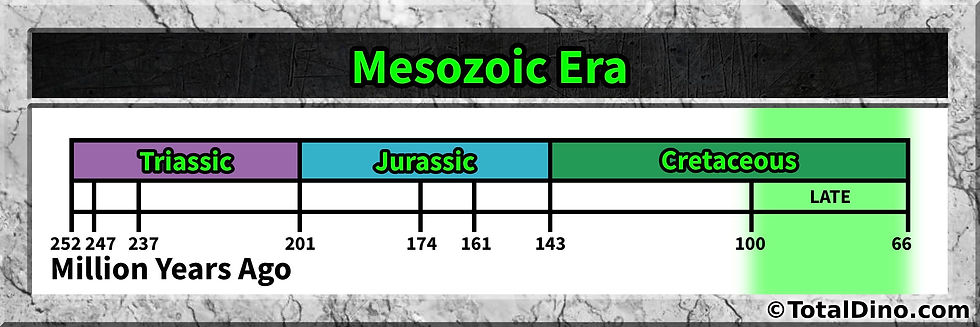
Nipponopelta is from the Late Cretaceous. The Cretaceous is the third and final geological period of the Mesozoic Era, with the Late Cretaceous making up roughly the second half of it, lasting from about 100 to 66 million years ago. It was a time of significant evolutionary change, with dinosaurs reaching their greatest diversity before the mass extinction at the end of the Cretaceous.
The Cretaceous was a period with a relatively warm climate, though the Late Cretaceous experienced a global cooling trend, caused by falling levels of carbon dioxide in the atmosphere. The continents were nearing their present positions, but high sea levels flooded low-lying regions, turning Europe into an archipelago, and forming the Western Interior Seaway in North America. These seas were home to a variety of marine reptiles, including mosasaurs and plesiosaurs, while pterosaurs and birds shared the skies.
On land, dinosaurs continued to thrive and diversify during the Late Cretaceous, producing many of the most well-known goups, including tyrannosaurs, hadrosaurs, and pachycephalosaurs. Established Cretaceous dinosaur clades like the ceratopsians, ankylosaurs, and dromaeosaurs continued to flourish. Sauropod species consisted almost exclusively of titanosaurs, which seemed to be confined to the Southern Hemisphere for much of the Late Cretaceous. Flowering plants and grasses diversified and spread, becoming the dominant flora similar to what we see today.
The Cretaceous (along with the Mesozoic) ended with the Cretaceous-Paleogene (K-Pg) extinction event, a large mass extinction in which many groups, including non-avian dinosaurs, pterosaurs, and large marine reptiles, died out. This event, likely triggered by an asteroid impact, is marked by the abrupt K-Pg boundary, a distinct geologic layer separating the Mesozoic and Cenozoic Eras. In its aftermath, mammals and avian dinosaurs rapidly diversified, becoming the dominant land animals of the Cenozoic Era.
Nipponopelta is a nodosaurid. Nodosaurids are a family of armored dinosaurs within Ankylosauria, distinct from their ankylosaurid relatives most notably by the absence of a tail club. Like all ankylosaurs, they were herbivorous, quadrupedal, and covered in bony osteoderms for protection. However, nodosaurids generally had narrower skulls, longer limbs, and more pronounced shoulder spikes compared to ankylosaurids.
They first appeared in the Late Jurassic and thrived until the end of the Cretaceous Period. Nodosaurids are primarily known from North America and Europe, with some fossils also found in South America and Asia, indicating a wider distribution than previously thought.
Nodosauridae and ankylosauridae make up the larger group ankylosauria, which, along with the stegosaurs, form the group Thyreophora, known for their various combinations of armor and spikes.


Comments