

Argentinosaurus
MEANING: Argentine lizard
PERIOD: Late Cretaceous
CONTINENT: South America
At the end of the Cretaceous period, South America was home to some of the largest sauropods. Argentinosaurus is an enormous titanosaurian sauropod dinosaur, and possibly the largest animal ever to walk the earth. This gigantic herbivore is estimated to have reached up to 35 m in length, and weighed around 80 t.

Argentinosaurus is featured in the
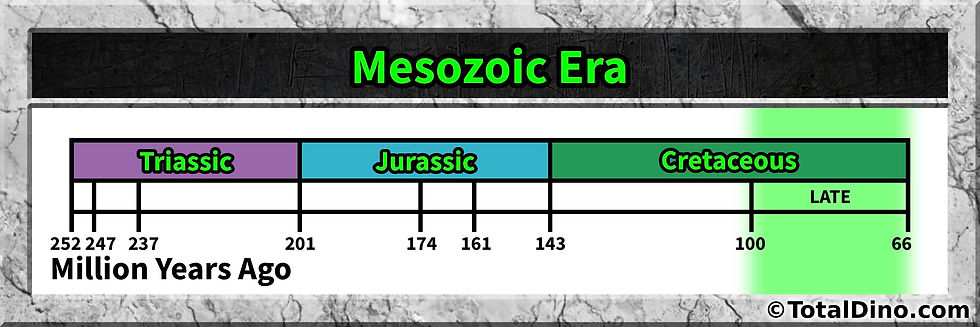
Argentinosaurus is from the Late Cretaceous. The Cretaceous is the third and final geological period of the Mesozoic Era, with the Late Cretaceous making up roughly the second half of it, lasting from about 100 to 66 million years ago. It was a time of significant evolutionary change, with dinosaurs reaching their greatest diversity before the mass extinction at the end of the Cretaceous.
The Cretaceous was a period with a relatively warm climate, though the Late Cretaceous experienced a global cooling trend, caused by falling levels of carbon dioxide in the atmosphere. The continents were nearing their present positions, but high sea levels flooded low-lying regions, turning Europe into an archipelago, and forming the Western Interior Seaway in North America. These seas were home to a variety of marine reptiles, including mosasaurs and plesiosaurs, while pterosaurs and birds shared the skies.
On land, dinosaurs continued to thrive and diversify during the Late Cretaceous, producing many of the most well-known goups, including tyrannosaurs, hadrosaurs, and pachycephalosaurs. Established Cretaceous dinosaur clades like the ceratopsians, ankylosaurs, and dromaeosaurs continued to flourish. Sauropod species consisted almost exclusively of titanosaurs, which seemed to be confined to the Southern Hemisphere for much of the Late Cretaceous. Flowering plants and grasses diversified and spread, becoming the dominant flora similar to what we see today.
The Cretaceous (along with the Mesozoic) ended with the Cretaceous-Paleogene (K-Pg) extinction event, a large mass extinction in which many groups, including non-avian dinosaurs, pterosaurs, and large marine reptiles, died out. This event, likely triggered by an asteroid impact, is marked by the abrupt K-Pg boundary, a distinct geologic layer separating the Mesozoic and Cenozoic Eras. In its aftermath, mammals and avian dinosaurs rapidly diversified, becoming the dominant land animals of the Cenozoic Era.
Argentinosaurus is a lognkosaurian titanosaur. Lognkosaurians are a family of large-bodied titanosaurs that include some of the largest land animals known to science. This group is primarily known from South America, particularly Argentina, where many of these colossal sauropods have been discovered.
Lognkosaurians are characterized by their massive size and distinctive body proportions. They had extremely long necks with highly elongated vertebrae, wide cervical ribs, and robust, barrel-shaped torsos. These features suggest adaptations for supporting a horizontally extensive feeding range, possibly allowing them to graze or browse across large swaths of vegetation without needing to move their entire bodies frequently.
They arose at the end of the Early Cretaceous and lived primarily through the Late Cretaceous, a period when titanosaurs were the dominant sauropods in the Southern Hemisphere. While other sauropod lineages had declined or disappeared in many parts of the world, lognkosaurians continued to thrive, representing a highly specialized and extreme branch of titanosaur evolution.


Comments