

Norellraptor
Updated: 21 hours ago
MEANING: Norell's thief
PERIOD: Early Cretaceous
CONTINENT: Asia
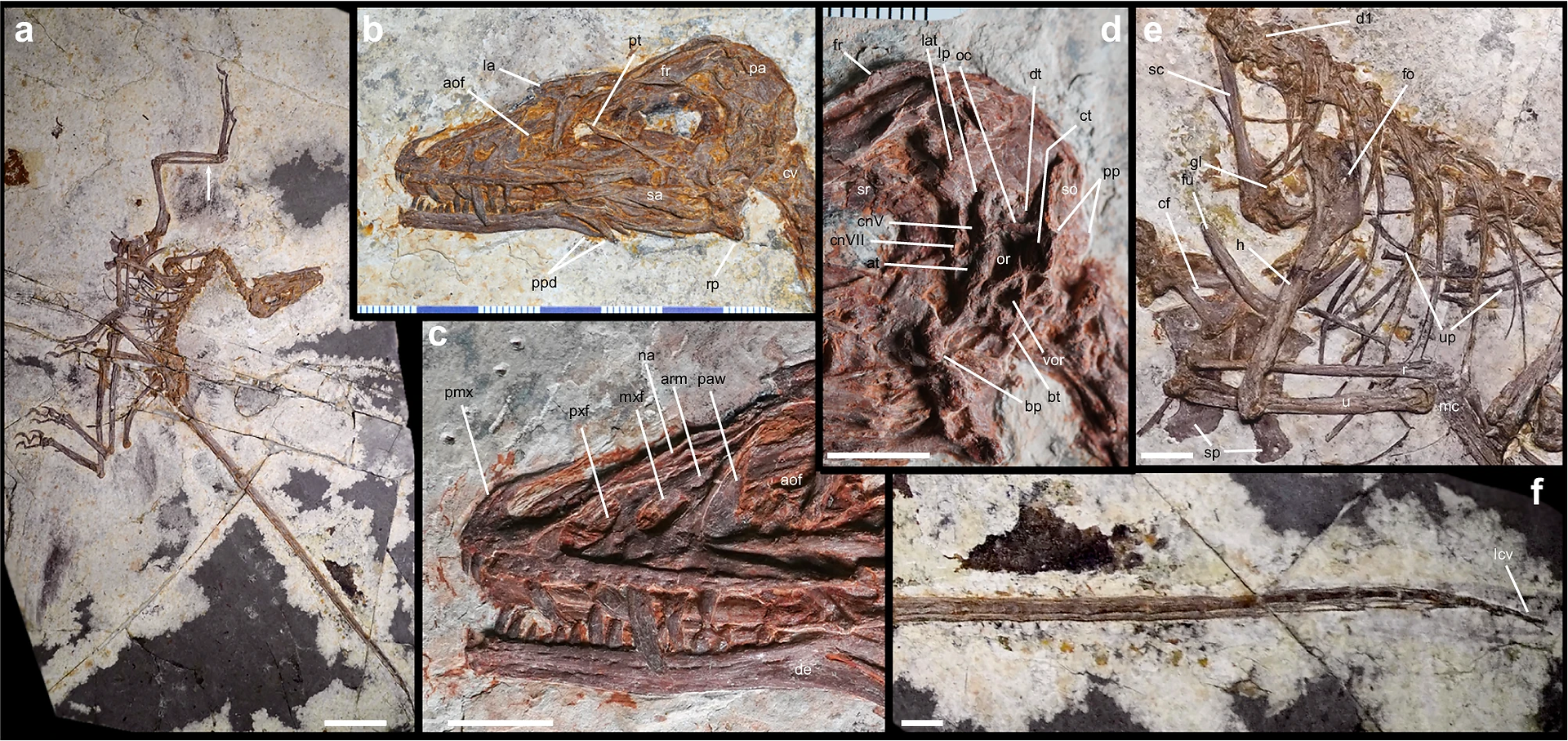
Norellraptor is a microraptorian dinosaur known from a specimen with exceptionally well-preserved feathers. Its discovery supports evidence that gliding and flight-related traits evolved independently in multiple dinosaur groups. Norellraptor had long feathers on its arms and legs, typical of microraptorians, resulting in a four-winged body plan.

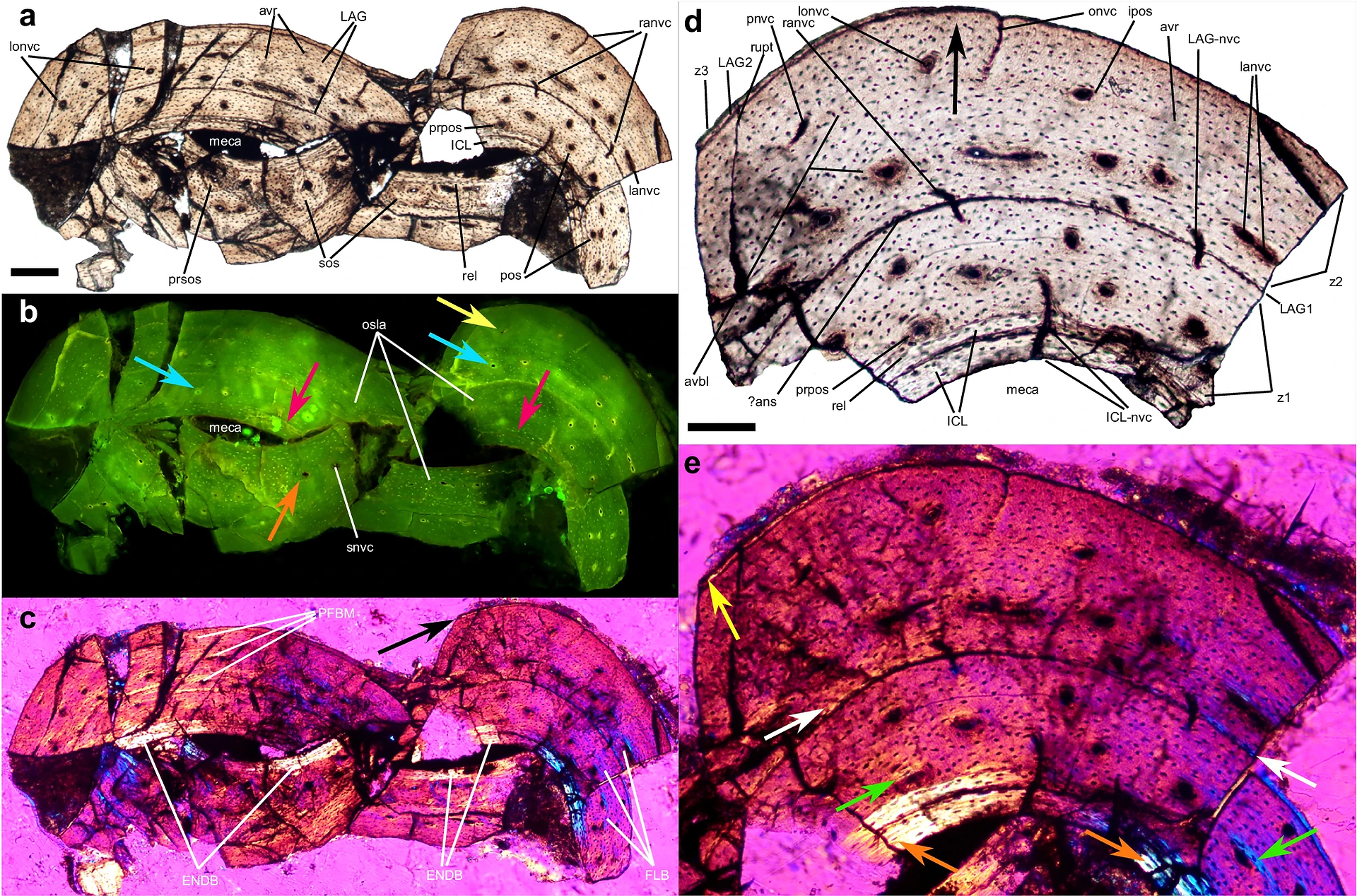
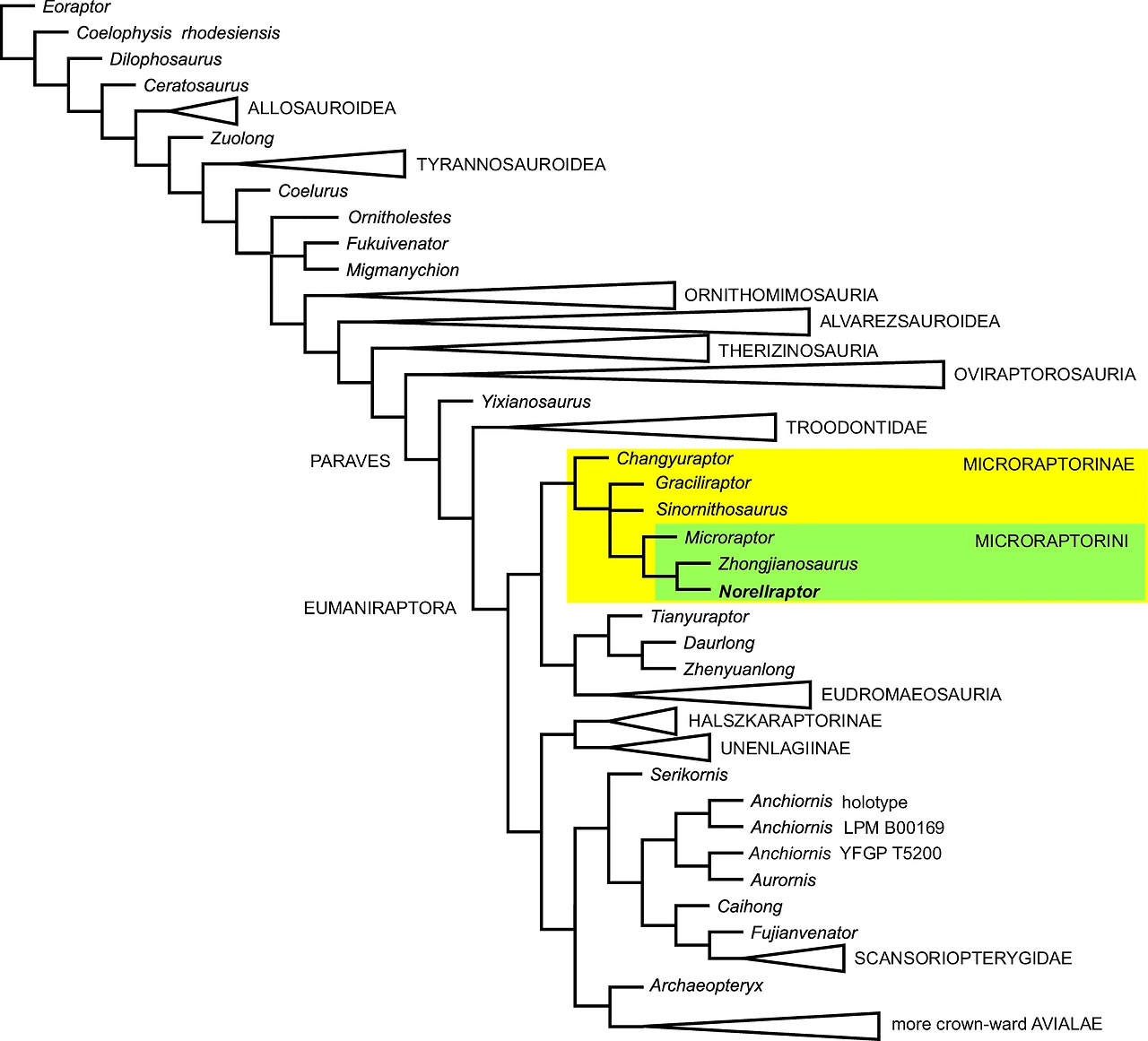
Abstract from paper: The discovery of feathered dinosaurs revolutionized the studies on the origin of birds and the evolution of their flight. Among paravians (birds and their closest relatives), the microraptorine dromaeosaurids are unique in bearing several flight-related adaptations with a controversial evolutionary interpretation, supporting, alternatively, flight as ancestral to Paraves or having evolved multiple times among the latter. Here, we introduce an exquisitely-preserved member of Microraptorinae, Norellraptor barsboldi gen. et sp. nov., and describe in detail forelimb osteohistological features for that clade. Norellraptor nests among late-diverging microraptorines and supports step-wise assembly of aerial adaptations in that clade. About 30% of the microraptorine synapomorphies are convergently acquired by the bird lineage (Avialae). Yet, the sequences of flight-related novelties reconstructed along the two lineages differ consistently; combined with histological evidence which might indicate a peculiar limb growth model in Microraptorinae, these results dismiss a shared developmental pattern driving the evolution of the flying dinosaurs and support multiple and independent selective regimes at the origin of the winged taxa in Paraves.

Norellraptor is from the Early Cretaceous. The Cretaceous is the third and final geological period of the Mesozoic Era, with the Early Cretaceous making up roughly the first half, lasting from about 143 to 100 million years ago. The poles were ice-free, due to the relatively warm climate, and forests extended into high latitudes. The continued breakup of the continents created new coastlines and isolated landmasses, influencing the evolution of distinct dinosaur faunas.
It was a time of transition, as many groups of animals and plants began to take on more modern forms while others declined or disappeared. Pterosaurs continued to thrive, though early birds were becoming more diverse and widespread. Mammals remained small but adapted to a variety of ecological niches. In the oceans, ichthyosaurs and plesiosaurs were common, and early mosasaurs began to appear.
Dinosaurs remained the dominant land animals, with groups like iguanodontians, spinosaurids, and carcharodontosaurids rising to prominence. While sauropods declined in some regions, they remained abundant in the Southern Hemisphere. The first true ceratopsians appeared, and ankylosaurs replaced stegosaurs in their niche. Dromaeosaurs and other small theropods diversified. During this time, the first flowering plants evolved, gradually changing global ecosystems by providing new food sources for herbivores.

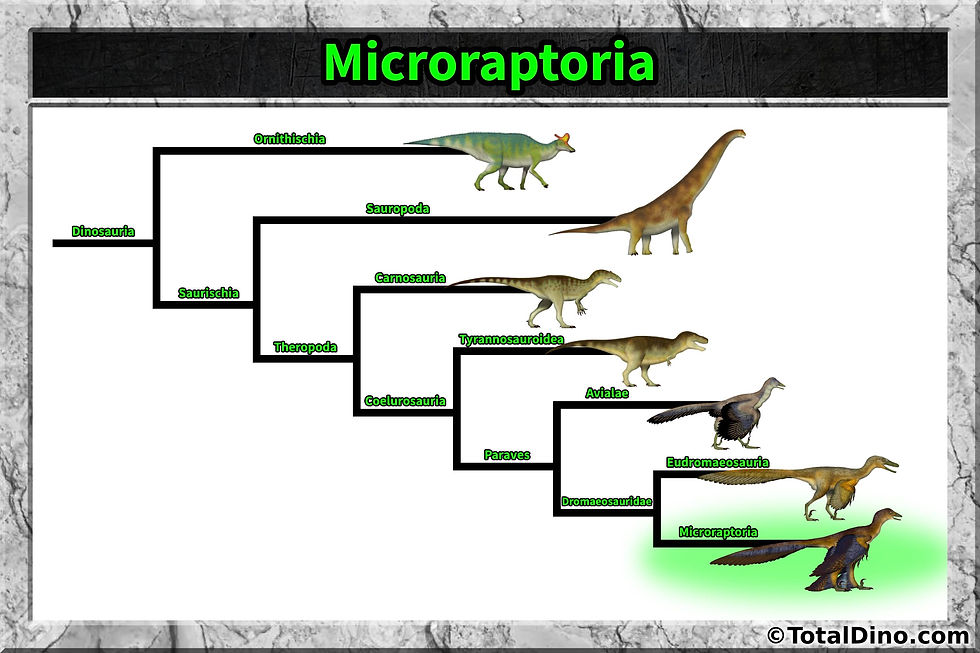
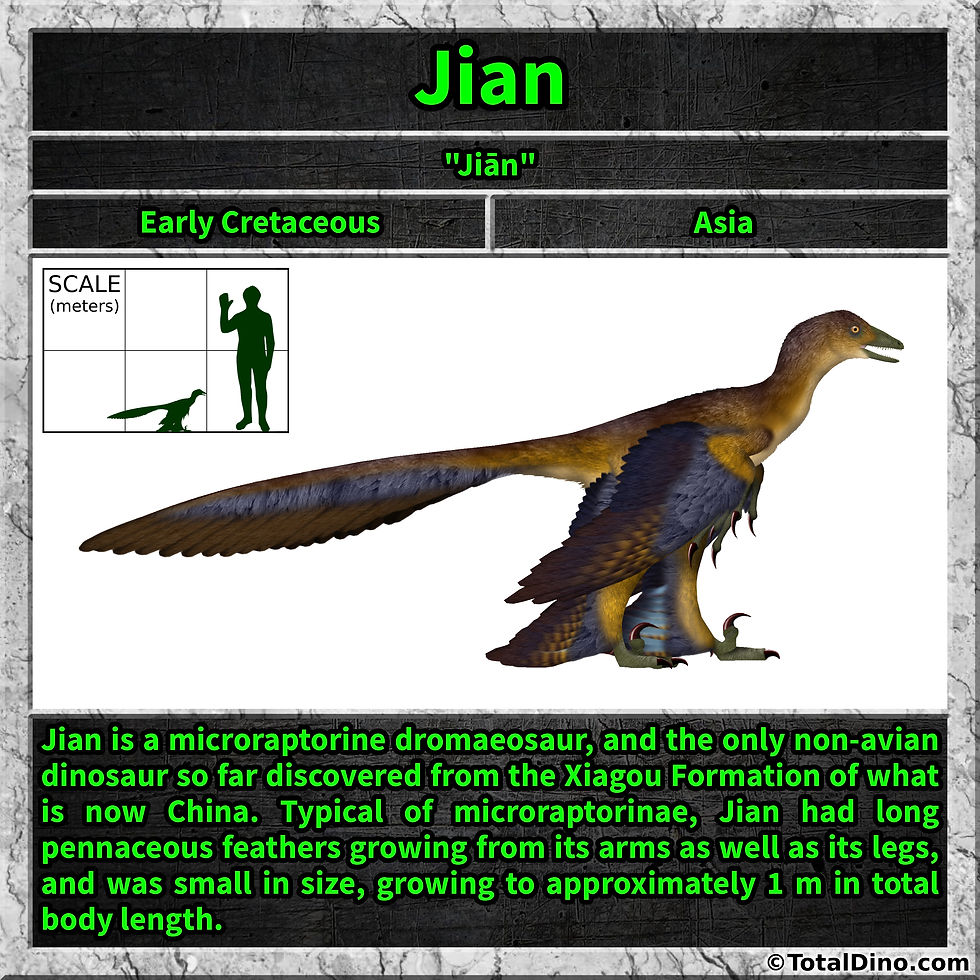
Norellraptor is a microraptorian dromaeosaur. Microraptoria is a group of small, long-feathered dromaeosaurids known almost entirely from the Early Cretaceous of China. Most were crow- to turkey-sized, with slender bodies, long tails, and often well-preserved plumage. Their most distinctive trait is the presence of long, asymmetrical flight feathers on both the arms and the legs, forming a four-winged body plan unlike anything seen in modern birds. Some species also had elongated tail feathers, in some cases forming fan or diamond-shaped display structures.
Microraptorians are among the best evidence that gliding, and possibly limited powered flight, evolved among non-avian paravians. Fossils show stiff, aerodynamically shaped feathers, and biomechanical studies suggest that species like Microraptor could glide effectively between trees. Their diets appear to have been varied and opportunistic. Preserved stomach contents include fish, birds, mammals, and lizards, indicating they hunted in both arboreal and terrestrial settings. Some specimens also preserve iridescent feather structures, suggesting glossy black plumage in at least a few species.
Microraptorians sit near the base of Dromaeosauridae, and their small size and feather-covered limbs offer a valuable window into how flight-related traits arose in the lineage leading toward birds.


Comments